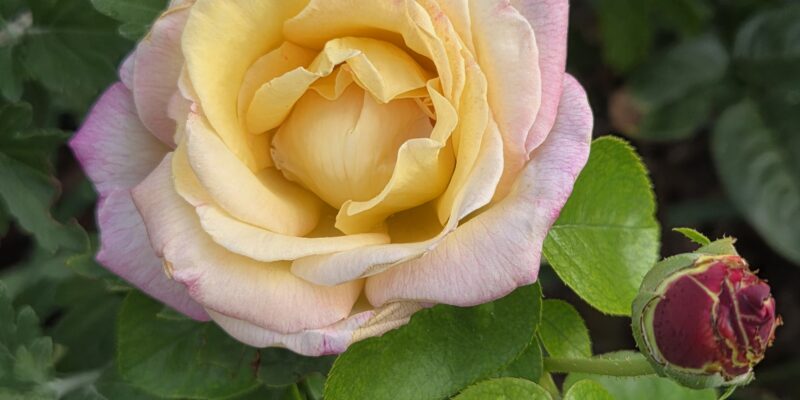
Peace Rose…A Message for This Moment
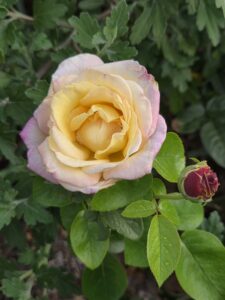
For many, the Peace rose is merely another pretty rose. When I look at this bloom, it reminds me of its significance and a message that rings true today. The Peace rose is an old familiar friend to those who love roses.
We can offer thanks to Francis Meilland, a horticulturist in France. Noticing the beauty of this rose as war consumed Europe, he sent root wood to horticulturists around the globe. The Conrad Pyle Company gave it the name 3-35-40. This company trialed, preserved, and produced this rose.
Over the years, the Peace rose has had many names in many different countries. Francis named it Madame Meilland to honor his mother. Once it became popular, Francis Meilland thought this rose should be his namesake. Although this request was denied, this rose became famous for another reason. Field Marshall Alan Brooke named this rose ‘Peace’ to honor the end of World War II on April 29, 1945. “We hope the ‘Peace’ rose will influence men’s thoughts for everlasting world peace” was attached to each rose in a beautiful card. Each member of the United Nations took a living message of peace back to their homeland. What a huge honor for such a beautiful rose.
Caring for Peace Rose
The soft yellow bloom, accented with pink edging, is only part of the beauty of Peace. With even watering, proper nutrients, and a bit of mulch to keep the roots moist, Peace will thrive in full sun. Using organic fertilizer and keeping the mulch at least two fingers away from the crown will keep this rose healthy. Providing proper air circulation will help alleviate fungal issues on the foliage. The sweet fragrance is great in a vase or even in a bouquet. Remember to deadhead for continuous bloom. Keep in mind this rose can grow up to 5+ feet in the right setting. Who can resist a sweet-smelling rose at nose level?
Negro Garden Clubs and Peace
The Peace rose had a special meaning for The Negro Garden Clubs of Virginia. Founded on April 22, 1932, these garden clubs grew to enhance and define the power of community. Negro Garden clubs had a mission to uplift their communities by demonstrating environmental justice, resilience, and empowerment.
There are memorable legends of the Negro Garden Clubs, including Lillian Hughes Savage. A pillar of her community, Lillian was a community organizer…not just a member of the Progressive Garden Club. This garden club promoted growing victory gardens and sharing the harvest. As 1942 President of the Negro Garden Clubs of Virginia, she encouraged those in her community to resist the ugliness in the world and enhance their environment with beauty. In the Jim Crow era, this was quite a task for underfunded, underserved communities. Beautiful gardens grew in front yards, churchyards, and everywhere in between. Negro Garden Clubs grew in communities throughout the United States, promoting beautification and civic engagement through churches and private societies. These garden clubs welcomed children and men.
Another legend of the Negro Garden Clubs is Marian Forsythe. She was a special education teacher, a community activist, and a member of Our Garden Club of Philadelphia and Vicinity. Her home in Philadelphia was known for the beautiful yellow roses she grew in her garden. The yellow roses provided a bit of sunshine as she cared for her brother, Paul Robeson. The Peace rose was chosen as the floral symbol of The Negro Garden Clubs.
Garden Club members often traded items such as passalong plants and seeds. These residents helped each other create beauty throughout their communities. In an unkind world, the garden clubs taught resistance through beautification and built stronger communities. The Negro Garden Clubs of Virginia are known for community beautification projects that supported diversity. Realizing the positive impacts of beautification efforts, these garden clubs were quite popular and even held gatherings to share their techniques and ideas. Many of these meetings offered rewards for floral arranging, hat decorating, and more. The participants wore their finest dresses, gloves, pearls, and were quite proud to be a part of creating beauty in the community.
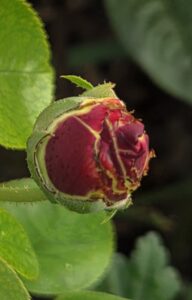
This week, after heat and drought, the Peace Rose in my garden bloomed. It was a visual symbol of hope for a better world that I needed to witness this week. With healthy foliage, it did not bloom in May or June. I worried it would succumb to the extreme weather experienced in early summer. I noticed buds setting in early August. An old saying assures us that a pot never boils over if you watch it. This rings true when waiting for a flower to bloom. In a week heavy with concern for this country, my Peace rose made its presence known.
I knew then why the Negro Garden Clubs chose this as their logo at such a challenging time in history. Peace, positivity, and hope are the gifts from my garden this week. I am honored to know that peace happens with persistence, resistance, and a bit of hope.
Call to Action
If you know of an African American Garden Club, or have a relative who was a member of a Negro Garden Club, let’s connect before the stories and documentation are lost. Sharing this story is important as we rebuild and beautify our communities.
What plants are in your garden that represent something meaningful in your life? Do you know the plant’s history?
Sitting here debating whether to cut this first bloom or enjoy its presence in this moment…


Maryland Inspires and Excites Gardeners and Their Gardens

Maryland is the Preakness State. Adored by horse and hat lover’s alike. For the gardener, the Maryland House & Garden Pilgrimage is definitely what the gardener in the know looks forward to. It is the perfect way to see gardens in neighboring counties which are often not open to the public. From historic homes, sprawling estates, to those gorgeous local gardens, generous Marylanders welcome ticketed guests. A wonderful way to view gardens from a different perspective.

I recently attended the Maryland House and Garden Pilgrimage in Talbot County. It was the perfect day to enjoy the serene landscapes as I traveled from garden to garden. It was quite a relaxing drive. Gracious homeowners and guests along the way, were happy to pause and have a conversation.

There were roses in abundance, peonies in bloom, and other assorted perennials. Many perennials were chomping at the bit to show off their beauty. Ooo’s and aah’s filled the air as the guests moved throughout the properties. I followed one path which had the perfect place to take a seat. I paused to notice different views in each direction. There was even a place right at the water’s edge. I imagined lingering at the end of a day filled with gardening, to enjoy good conversations, all while watching the sun become a distant memory. The views were absolutely phenomenal. I noticed a pet cemetery strategically placed to remember the fur babies who kept the homeowners company over the years. It was the perfect spot for a final resting place right next to a living shoreline.

Pops of color excite and inspire all who visited to try something new. The ooh’s and aah’s shared a sense of approval as well as a desire to see what more this landscape had to share. Along the way, visitors had the opportunity to soak up more inspiration from the walled garden filled with bodacious blooms to the serenity of the woodland nooks.

Once at the house, the invitation to take a seat and enjoy a cup of lemonade was truly an unexpected gift to those who visited this garden. This was just one of the gardens I visited on a perfect day of garden tourism in Maryland.

Most gardens do not allow photographs, as these are private homes. Having a good memory or taking notes in the tour book is a good idea. Taking notes of container plant combinations or named roses, reminds the the gardener later on. There was a vignette in a beautiful pot that touched my heart so, I took notes. On the way home, I headed to the closest garden center in an attempt to capture the memory.
On that beautiful Maryland day, I saw a historical Orangery, had ice cream in St. Michel’s, and met other Marylanders from Alleghany County. There might still be tickets available for purchase. The Maryland House and Garden Pilgrimage will feature Kensington this weekend on Sunday, June 7th. The final tour for this year will be in Frederick County on Saturday, June 13th.

I wonder if they will have ice cream for dinner? The Maryland House and Garden Pilgrimage is a great way to see how others garden. It is also a great way to find out more in the familiar places close to home.

Need more information, visit https://www.mhgpo.org/2026-tours/
Teri, Cottage in the Court
(Photos are my own and no AI was used for this posting.)

Bouquets That Matter – Homage to the Ancestors

Bouquets for special events are so meaningful. When flowers are gathered for weddings, funerals, anniversaries, or simple dinner parties, carefully curated bouquets add a special touch. Creating florals is also a way to honor something or someone meaningful.
Many times, we reflect on our history on a certain day or a moment dictated by the calendar. There are also times when the urge to show ancestral appreciation comes from the heart. On the most recent celebration of Dr. Martin Luther King’s birthday, I thought, if the opportunity to give him his flowers in real life, what would that bouquet look like? Where would I get the flowers? What vessel would I use, all from a mindset of one who had to create something out of nothing?
In the middle of January, what kind of flowers could I find to make a statement bouquet? What flowers would Dr. King appreciate? Was there a bouquet he would enjoy as he paused on this part of his journey? Stepping back in time, I mentally recreated what that might look like.
First, the vessel would be something from the China cabinet. In my youth, I remember Grandma opening the China cabinet on special occasions. She was looking for that special dish or bowl. The fancy dishes were always used as a way to show appreciation to visitors or family members. Grandma would carefully select a vessel that fit the occasion. I often wonder how she knew which one to choose?
When selecting flowers, Grandma would choose whatever was blooming in the yard. Hydrangeas were familiar fixtures in the yards of both grandmothers. My Mom’s mother would have pink and white hydrangeas along the front porch in front of the elephant ear plants. Dad’s mother would have Hydrangeas along the neighboring fence and neatly tucked at the foundation of the house. This was Grandma’s way to define property lines with beauty in mind. There was even one right at the gate in the front yard. All the grandkids loved standing on the frame of the wrought iron gate, where a gentle push would swing them back and forth. “Don’t you all swing into my bush and break the branches’, Grandma would yell from inside the house. W we skillfully continued to swing on that gate in our Sunday best. Grandma was able to enjoy every bloom.

In the middle of winter, there were no blooms in the yard. It was a sacrifice to purchase blooms from the store. Many stores in the African American community did not offer flowers. A funeral home or the Mothers of the Church might offer to help with repurposed, or artificial flowers. This was a common practice, if one were a domestic worker. In some communities, if there were African American florists , they often provided flowers in times of need. Some could afford this, and others simply could not. No matter the economics of the family, in my community, there was always a way to obtain a few flowers.
I had to imagine where I would go in my community to find flowers to honor my ancestors. My dad would drive my mom to Safeway in Cloverly, Maryland. Sometimes Mom would splurge on a bundle of flowers. Mom made the most beautiful arrangements using whatever was in the store, often mixing with whatever was in our yard. Sometimes, her best friend and our neighbor Pearl would offer cuttings as well.

Using memories of my Mom, I made a bouquet worthy of a smile…at least to me. The goal was to make an arrangement that would be worthy of a King.
Do you create flowers to honor someone important in your life? Were there flowers from the backyard or the store present to inspire your flower journey? I am glad to have an appreciation of simple beauty from the garden. It is the bouquet that keeps giving me life and the passion to encourage others to use whatever is on hand.
I wonder if my Camellias survived the snow. I need a few branches to celebrate my southern roots.
Teri, Cottage in the Court
.

First Day, First Snow, and Time to Sow

Happy New Year. I awakened early on this first day of 2026 to witness the first snowfall. My imagination allowed me to assume it would be plentiful after driving on heavily treated roads the past two days.
We bundled up, cracked open the door, and witnessed golden Amsonia branches glistening with shimmering flakes of snow. Powdered snow dusted the pansies and the leaf blanket that covered them.
Arms locked together, we walked on the first day, looking up in hopes a snowflake would gently rest on our faces. Our cheeks facing the heavens were greeted with gentle snowflakes. Each one instantly melted upon contact. This was an innocent moment, frozen in time.
Precious sniffed here and there, for once, slowly strolling as if appreciating the silent start to this day. Walking at daybreak encourages me to fall in love with my sleepy urban community. The unique tree canopies carry stories of the past. Each homeowner creates a garden or strives toward having the perfect lawn. Every yard writes a new chapter in this neighborhood story.

Upon our return home, I notice bulb tips emerging from the earth in my garden. I realize it’s time to select and sow seeds for the next season, not just in my garden, but also in my life. What seeds will I sow? Only seeds of positivity, perennial seeds preferably, or biennial seeds. Sowing seeds reminds me to avoid any distractions or things that might discourage me from sowing seeds of joy for the next season. Sown correctly, the next season’s blooms will remind me to hang in there, witnessing all things beautiful!
What was your impression of the first day of 2026? Did you have snow? Did you rest and reflect? I hope you made time for a memory and a plan for sowing seeds of joy.
I love the times of rest, reflection, and preparation that occur on the first day of each year.
Teri, Cottage in the Court