
Peace Rose…A Message for This Moment

For many, the Peace rose is merely another pretty rose. When I look at this bloom, it reminds me of its significance and a message that rings true today. The Peace rose is an old familiar friend to those who love roses.
We can offer thanks to Francis Meilland, a horticulturist in France. Noticing the beauty of this rose as war consumed Europe, he sent root wood to horticulturists around the globe. The Conrad Pyle Company gave it the name 3-35-40. This company trialed, preserved, and produced this rose.
Over the years, the Peace rose has had many names in many different countries. Francis named it Madame Meilland to honor his mother. Once it became popular, Francis Meilland thought this rose should be his namesake. Although this request was denied, this rose became famous for another reason. Field Marshall Alan Brooke named this rose ‘Peace’ to honor the end of World War II on April 29, 1945. “We hope the ‘Peace’ rose will influence men’s thoughts for everlasting world peace” was attached to each rose in a beautiful card. Each member of the United Nations took a living message of peace back to their homeland. What a huge honor for such a beautiful rose.
Caring for Peace Rose
The soft yellow bloom, accented with pink edging, is only part of the beauty of Peace. With even watering, proper nutrients, and a bit of mulch to keep the roots moist, Peace will thrive in full sun. Using organic fertilizer and keeping the mulch at least two fingers away from the crown will keep this rose healthy. Providing proper air circulation will help alleviate fungal issues on the foliage. The sweet fragrance is great in a vase or even in a bouquet. Remember to deadhead for continuous bloom. Keep in mind this rose can grow up to 5+ feet in the right setting. Who can resist a sweet-smelling rose at nose level?
Negro Garden Clubs and Peace
The Peace rose had a special meaning for The Negro Garden Clubs of Virginia. Founded on April 22, 1932, these garden clubs grew to enhance and define the power of community. Negro Garden clubs had a mission to uplift their communities by demonstrating environmental justice, resilience, and empowerment.
There are memorable legends of the Negro Garden Clubs, including Lillian Hughes Savage. A pillar of her community, Lillian was a community organizer…not just a member of the Progressive Garden Club. This garden club promoted growing victory gardens and sharing the harvest. As 1942 President of the Negro Garden Clubs of Virginia, she encouraged those in her community to resist the ugliness in the world and enhance their environment with beauty. In the Jim Crow era, this was quite a task for underfunded, underserved communities. Beautiful gardens grew in front yards, churchyards, and everywhere in between. Negro Garden Clubs grew in communities throughout the United States, promoting beautification and civic engagement through churches and private societies. These garden clubs welcomed children and men.
Another legend of the Negro Garden Clubs is Marian Forsythe. She was a special education teacher, a community activist, and a member of Our Garden Club of Philadelphia and Vicinity. Her home in Philadelphia was known for the beautiful yellow roses she grew in her garden. The yellow roses provided a bit of sunshine as she cared for her brother, Paul Robeson. The Peace rose was chosen as the floral symbol of The Negro Garden Clubs.
Garden Club members often traded items such as passalong plants and seeds. These residents helped each other create beauty throughout their communities. In an unkind world, the garden clubs taught resistance through beautification and built stronger communities. The Negro Garden Clubs of Virginia are known for community beautification projects that supported diversity. Realizing the positive impacts of beautification efforts, these garden clubs were quite popular and even held gatherings to share their techniques and ideas. Many of these meetings offered rewards for floral arranging, hat decorating, and more. The participants wore their finest dresses, gloves, pearls, and were quite proud to be a part of creating beauty in the community.
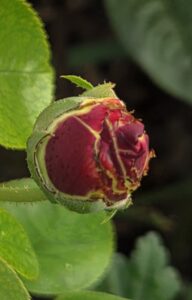
This week, after heat and drought, the Peace Rose in my garden bloomed. It was a visual symbol of hope for a better world that I needed to witness this week. With healthy foliage, it did not bloom in May or June. I worried it would succumb to the extreme weather experienced in early summer. I noticed buds setting in early August. An old saying assures us that a pot never boils over if you watch it. This rings true when waiting for a flower to bloom. In a week heavy with concern for this country, my Peace rose made its presence known.
I knew then why the Negro Garden Clubs chose this as their logo at such a challenging time in history. Peace, positivity, and hope are the gifts from my garden this week. I am honored to know that peace happens with persistence, resistance, and a bit of hope.
Call to Action
If you know of an African American Garden Club, or have a relative who was a member of a Negro Garden Club, let’s connect before the stories and documentation are lost. Sharing this story is important as we rebuild and beautify our communities.
What plants are in your garden that represent something meaningful in your life? Do you know the plant’s history?
Sitting here debating whether to cut this first bloom or enjoy its presence in this moment…


Perspective – Being Rooted in the Origins of American Gardening

Perspective, by definition, has a multitude of meanings. One of which is a different or personal way of looking at something or things. We know that no one will always agree on what is beautiful. What is relevant in one person’s garden might not be the taste of another’s. Gardens reflect an idea or concept for the viewer to consider. To be clear, gardens are personal. When attending any flower show, you often see mixed seasons, in addition to mixed genres exhibited throughout the space. Diversity found in every exhibit allows the attendees a unique personal experience. The beauty of attending flower shows is discovering diverse perspectives on beauty.
In a discussion with Andrew Bunting, I asked what I should look for at the 2026 Philadelphia Flower Show. “Rooted: Origins of American Gardening” was the theme this year. This word has different meanings to different people. I was not sure what to expect. He assured me there were some key displays to look for, with a few surprises as well. Due to time constraints, I was unable to share a quick recording discussing this year’s theme. However, he was correct in how the show had changed, what to look for, and what displays offered a little special twist.
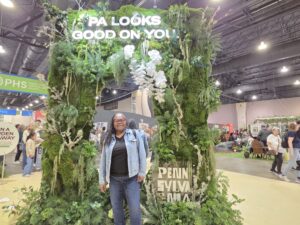 The Philadelphia Flower Show is a yearly can’t-miss event. As winter winds down, most gardeners begin seeking various spring-related events. These events confirm that a new season filled with pops of color and new growth is just around the corner. I have made this yearly trek with groups, girlfriends, my sister, and as a solo traveler.
The only time I missed attending was when we could not safely gather. There were a few times over the years when I visited the show twice. Okay, maybe a few times, I went three times. The Philadelphia Flower Show is my secret addiction. This Flower Show is the best way to be inspired before spring officially starts. The displays by familiar designers such as Susan Cohan and Kelly D. Norris are amazing, as they teach us to appreciate the natural landscape. However, this year was different.
My perspective on “Rooted: Origins of American Gardening” might be a little different than most. I was not sure what I would see. Would it reflect traditional American gardening taught in history books? It made sense that it would share cultural examples reflective of the diversity found in our country. I was honestly excited to see a few different perspectives on what rooted means to some garden aficionados.
As usual, the displays were fabulous and beckoned the most seasoned gardener to pause. Each design team invited the attendees to reimagine their landscape or at least depart with a new idea for the season. Many people took photos, angling for the best view, all while avoiding being part of another photographer’s photo story.
When the crowd abruptly stopped, I could barely see the reason why. Many in the crowd just stared in awe. It was easy to weave and make my way to the front. I was pleasantly surprised by the enormous work of art before me. As I laid eyes on this display, I silently wept. This was the work of Floral artist Tanesha Sample. Her community and followers know her as Tissarose. This creative floral designer has me in awe of her skills. The thoughtfulness and intentional messaging were amazing. This floral display truly resonated with me.
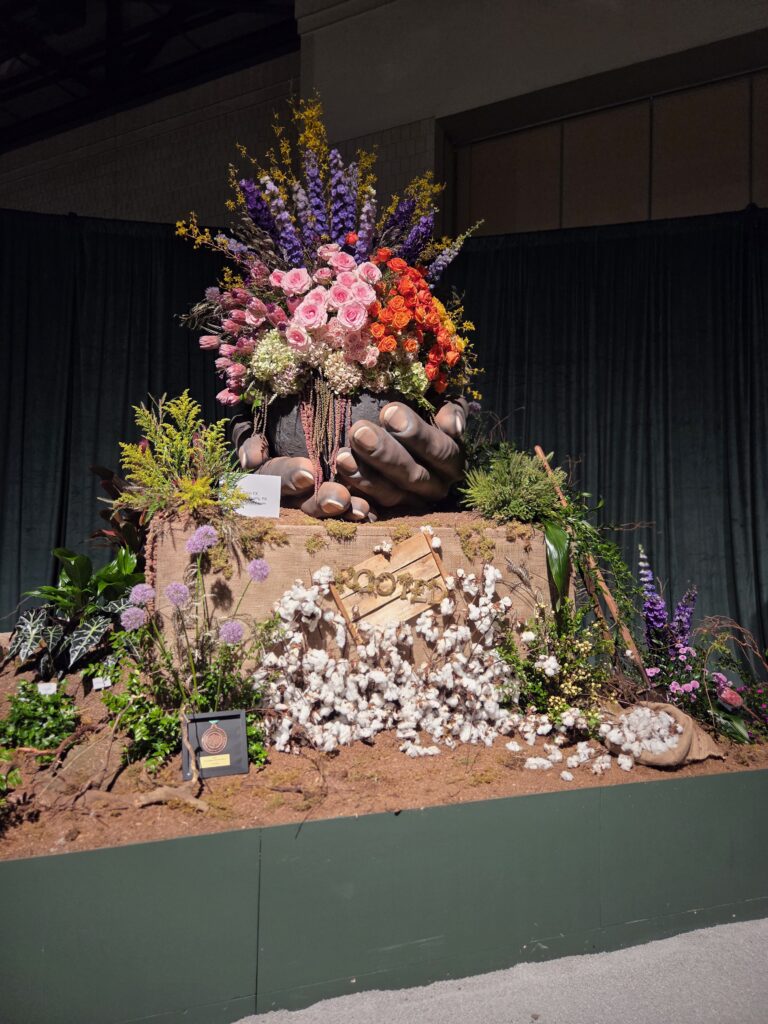
It was as though an entire conversation took place as I gazed at the hand in front of me. My eyes welled up with tears. Using the language of art and flowers, Tissarose made a cultural statement. This creative perspective of being rooted was beautifully displayed. In the 30+ years I attended this show, I never thought I would see this in my lifetime.
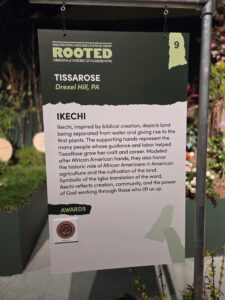
As I got closer, my heart melted, and the tears continued to fall. Tissarose created a floral message in her own unique way, using her origin story. She defined being rooted in a culture often underrepresented in the world of horticulture. I was emotionally shaken, yet my heart was filled with joy. IKECHI is a word of Igbo origin. In the Nigerian language, the translation is God’s Power is Life.
The details were amazing and caused my heart to flutter. With each flower, her hands created a short story of her message. Using cotton, this floral artist reminded the attendees of how African American hands played a role in many of the historic gardens we visit today. Tissarose shared what is in her heart through her handiwork with flowers and foliage. Few people are comfortable sharing their personal perspective in their floral journey. This one spoke volumes. I found intimate time with the display to explore it in depth, as the crowds headed off to dinner. When all was quiet, tears slowly flowed from my eyes as I admired this amazing work of floral artistry. I understood her powerful message.
There are many memories sown along the road of Tanesha’s floral journey, including the love and loss of a caring mother. Memories of Miss Connie’s tree, where the neighborhood gathered, are honored in this work of art. Faith is the fertilizer that encourages her roots to grow. The beliefs that have kept her grounded provide her confidence as she creates floral stories with her hands. It was a pleasant, relatable perspective that was long overdue.
I will share more memories from the 2026 Philadelphia Flower Show. It was quite fabulous. I want to say thank you, Tissa Rose. Being rooted in your faith and persevering can bring a story to life. Sharing your perspective on the origins of your American story was quite the creative story.

Click to find out more about Tissarose. Click to discover more about PHS
Now I am looking forward to the 2027 Philadelphia Flower Show and wondering how many times I might have to visit.


Maryland Inspires and Excites Gardeners and Their Gardens

Maryland is the Preakness State. Adored by horse and hat lover’s alike. For the gardener, the Maryland House & Garden Pilgrimage is definitely what the gardener in the know looks forward to. It is the perfect way to see gardens in neighboring counties which are often not open to the public. From historic homes, sprawling estates, to those gorgeous local gardens, generous Marylanders welcome ticketed guests. A wonderful way to view gardens from a different perspective.

I recently attended the Maryland House and Garden Pilgrimage in Talbot County. It was the perfect day to enjoy the serene landscapes as I traveled from garden to garden. It was quite a relaxing drive. Gracious homeowners and guests along the way, were happy to pause and have a conversation.

There were roses in abundance, peonies in bloom, and other assorted perennials. Many perennials were chomping at the bit to show off their beauty. Ooo’s and aah’s filled the air as the guests moved throughout the properties. I followed one path which had the perfect place to take a seat. I paused to notice different views in each direction. There was even a place right at the water’s edge. I imagined lingering at the end of a day filled with gardening, to enjoy good conversations, all while watching the sun become a distant memory. The views were absolutely phenomenal. I noticed a pet cemetery strategically placed to remember the fur babies who kept the homeowners company over the years. It was the perfect spot for a final resting place right next to a living shoreline.
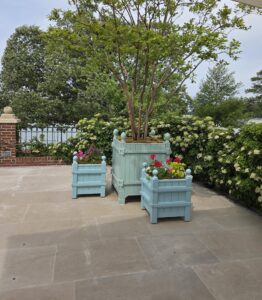
Pops of color excite and inspire all who visited to try something new. The ooh’s and aah’s shared a sense of approval as well as a desire to see what more this landscape had to share. Along the way, visitors had the opportunity to soak up more inspiration from the walled garden filled with bodacious blooms to the serenity of the woodland nooks.
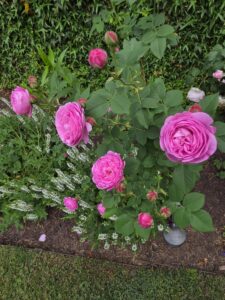
Once at the house, the invitation to take a seat and enjoy a cup of lemonade was truly an unexpected gift to those who visited this garden. This was just one of the gardens I visited on a perfect day of garden tourism in Maryland.
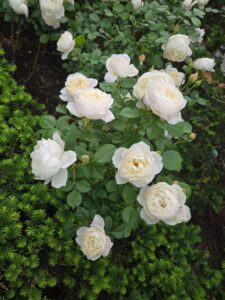
Most gardens do not allow photographs, as these are private homes. Having a good memory or taking notes in the tour book is a good idea. Taking notes of container plant combinations or named roses, reminds the the gardener later on. There was a vignette in a beautiful pot that touched my heart so, I took notes. On the way home, I headed to the closest garden center in an attempt to capture the memory.
On that beautiful Maryland day, I saw a historical Orangery, had ice cream in St. Michel’s, and met other Marylanders from Alleghany County. There might still be tickets available for purchase. The Maryland House and Garden Pilgrimage will feature Kensington this weekend on Sunday, June 7th. The final tour for this year will be in Frederick County on Saturday, June 13th.

I wonder if they will have ice cream for dinner? The Maryland House and Garden Pilgrimage is a great way to see how others garden. It is also a great way to find out more in the familiar places close to home.

Need more information, visit https://www.mhgpo.org/2026-tours/
Teri, Cottage in the Court
(Photos are my own and no AI was used for this posting.)
Community Gardens: Building Community by Gardening & Digging In the Dirt with Your Neighbors
Talbot County Garden Club Free Winter Lecture Series
TUESDAY, FEBRUARY 24 – 11 AM to 12:30 PM
Talbot County Free Library, Easton, MD
Learn about a stellar community garden model and what it takes to create a successful green space venture for a community.
Get practical tips on the following:
- earth-friendly gardening practices that involve drought tolerant plants, small space gardens, shade gardens, and more.
- Discover the treasure that African American gardeners have passed along in their appreciation for the life-sustaining gifts of the soil.
- Expect to be inspired by Teresa’s visionary approach to gardening that reaches back to an ancestral love for the earth and forward to creative possibilities for every community!
As a passionate Community Gardener, Teri enjoys inspiring others to create community spaces which brings people together to celebrate diversity in community.