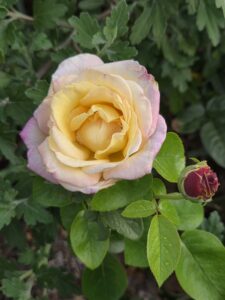
For many, the Peace rose is merely another pretty rose. When I look at this bloom, it reminds me of its significance and a message that rings true today. The Peace rose is an old familiar friend to those who love roses.
We can offer thanks to Francis Meilland, a horticulturist in France. Noticing the beauty of this rose as war consumed Europe, he sent root wood to horticulturists around the globe. The Conrad Pyle Company gave it the name 3-35-40. This company trialed, preserved, and produced this rose.
Over the years, the Peace rose has had many names in many different countries. Francis named it Madame Meilland to honor his mother. Once it became popular, Francis Meilland thought this rose should be his namesake. Although this request was denied, this rose became famous for another reason. Field Marshall Alan Brooke named this rose ‘Peace’ to honor the end of World War II on April 29, 1945. “We hope the ‘Peace’ rose will influence men’s thoughts for everlasting world peace” was attached to each rose in a beautiful card. Each member of the United Nations took a living message of peace back to their homeland. What a huge honor for such a beautiful rose.
Caring for Peace Rose
The soft yellow bloom, accented with pink edging, is only part of the beauty of Peace. With even watering, proper nutrients, and a bit of mulch to keep the roots moist, Peace will thrive in full sun. Using organic fertilizer and keeping the mulch at least two fingers away from the crown will keep this rose healthy. Providing proper air circulation will help alleviate fungal issues on the foliage. The sweet fragrance is great in a vase or even in a bouquet. Remember to deadhead for continuous bloom. Keep in mind this rose can grow up to 5+ feet in the right setting. Who can resist a sweet-smelling rose at nose level?
Negro Garden Clubs and Peace
The Peace rose had a special meaning for The Negro Garden Clubs of Virginia. Founded on April 22, 1932, these garden clubs grew to enhance and define the power of community. Negro Garden clubs had a mission to uplift their communities by demonstrating environmental justice, resilience, and empowerment.
There are memorable legends of the Negro Garden Clubs, including Lillian Hughes Savage. A pillar of her community, Lillian was a community organizer…not just a member of the Progressive Garden Club. This garden club promoted growing victory gardens and sharing the harvest. As 1942 President of the Negro Garden Clubs of Virginia, she encouraged those in her community to resist the ugliness in the world and enhance their environment with beauty. In the Jim Crow era, this was quite a task for underfunded, underserved communities. Beautiful gardens grew in front yards, churchyards, and everywhere in between. Negro Garden Clubs grew in communities throughout the United States, promoting beautification and civic engagement through churches and private societies. These garden clubs welcomed children and men.
Another legend of the Negro Garden Clubs is Marian Forsythe. She was a special education teacher, a community activist, and a member of Our Garden Club of Philadelphia and Vicinity. Her home in Philadelphia was known for the beautiful yellow roses she grew in her garden. The yellow roses provided a bit of sunshine as she cared for her brother, Paul Robeson. The Peace rose was chosen as the floral symbol of The Negro Garden Clubs.
Garden Club members often traded items such as passalong plants and seeds. These residents helped each other create beauty throughout their communities. In an unkind world, the garden clubs taught resistance through beautification and built stronger communities. The Negro Garden Clubs of Virginia are known for community beautification projects that supported diversity. Realizing the positive impacts of beautification efforts, these garden clubs were quite popular and even held gatherings to share their techniques and ideas. Many of these meetings offered rewards for floral arranging, hat decorating, and more. The participants wore their finest dresses, gloves, pearls, and were quite proud to be a part of creating beauty in the community.
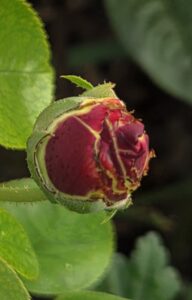
This week, after heat and drought, the Peace Rose in my garden bloomed. It was a visual symbol of hope for a better world that I needed to witness this week. With healthy foliage, it did not bloom in May or June. I worried it would succumb to the extreme weather experienced in early summer. I noticed buds setting in early August. An old saying assures us that a pot never boils over if you watch it. This rings true when waiting for a flower to bloom. In a week heavy with concern for this country, my Peace rose made its presence known.
I knew then why the Negro Garden Clubs chose this as their logo at such a challenging time in history. Peace, positivity, and hope are the gifts from my garden this week. I am honored to know that peace happens with persistence, resistance, and a bit of hope.
Call to Action
If you know of an African American Garden Club, or have a relative who was a member of a Negro Garden Club, let’s connect before the stories and documentation are lost. Sharing this story is important as we rebuild and beautify our communities.
What plants are in your garden that represent something meaningful in your life? Do you know the plant’s history?
Sitting here debating whether to cut this first bloom or enjoy its presence in this moment…
