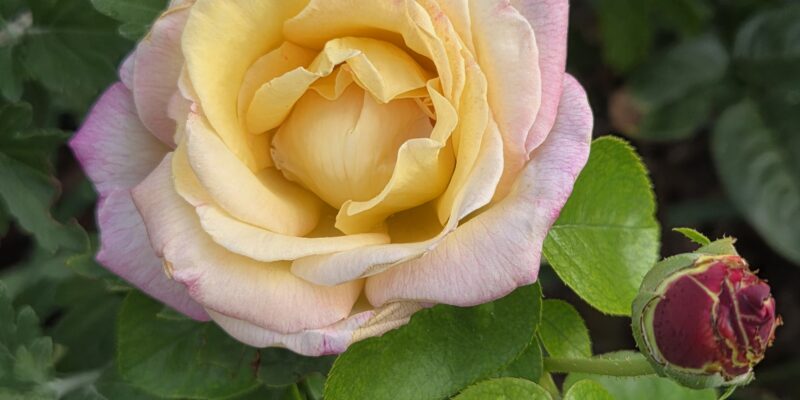
Peace Rose…A Message for This Moment
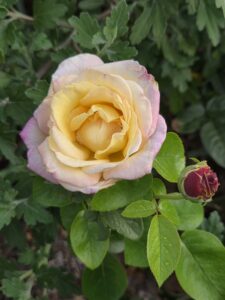
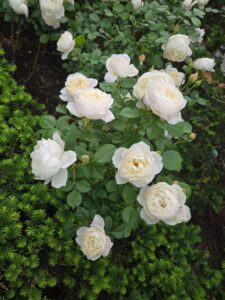
For many, the Peace rose is merely another pretty rose. When I look at this bloom, it reminds me of its significance and a message that rings true today. The Peace rose is an old familiar friend to those who love roses.
We can offer thanks to Francis Meilland, a horticulturist in France. Noticing the beauty of this rose as war consumed Europe, he sent root wood to horticulturists around the globe. The Conrad Pyle Company gave it the name 3-35-40. This company trialed, preserved, and produced this rose.
Over the years, the Peace rose has had many names in many different countries. Francis named it Madame Meilland to honor his mother. Once it became popular, Francis Meilland thought this rose should be his namesake. Although this request was denied, this rose became famous for another reason. Field Marshall Alan Brooke named this rose ‘Peace’ to honor the end of World War II on April 29, 1945. “We hope the ‘Peace’ rose will influence men’s thoughts for everlasting world peace” was attached to each rose in a beautiful card. Each member of the United Nations took a living message of peace back to their homeland. What a huge honor for such a beautiful rose.
Caring for Peace Rose
The soft yellow bloom, accented with pink edging, is only part of the beauty of Peace. With even watering, proper nutrients, and a bit of mulch to keep the roots moist, Peace will thrive in full sun. Using organic fertilizer and keeping the mulch at least two fingers away from the crown will keep this rose healthy. Providing proper air circulation will help alleviate fungal issues on the foliage. The sweet fragrance is great in a vase or even in a bouquet. Remember to deadhead for continuous bloom. Keep in mind this rose can grow up to 5+ feet in the right setting. Who can resist a sweet-smelling rose at nose level?
Negro Garden Clubs and Peace
The Peace rose had a special meaning for The Negro Garden Clubs of Virginia. Founded on April 22, 1932, these garden clubs grew to enhance and define the power of community. Negro Garden clubs had a mission to uplift their communities by demonstrating environmental justice, resilience, and empowerment.
There are memorable legends of the Negro Garden Clubs, including Lillian Hughes Savage. A pillar of her community, Lillian was a community organizer…not just a member of the Progressive Garden Club. This garden club promoted growing victory gardens and sharing the harvest. As 1942 President of the Negro Garden Clubs of Virginia, she encouraged those in her community to resist the ugliness in the world and enhance their environment with beauty. In the Jim Crow era, this was quite a task for underfunded, underserved communities. Beautiful gardens grew in front yards, churchyards, and everywhere in between. Negro Garden Clubs grew in communities throughout the United States, promoting beautification and civic engagement through churches and private societies. These garden clubs welcomed children and men.
Another legend of the Negro Garden Clubs is Marian Forsythe. She was a special education teacher, a community activist, and a member of Our Garden Club of Philadelphia and Vicinity. Her home in Philadelphia was known for the beautiful yellow roses she grew in her garden. The yellow roses provided a bit of sunshine as she cared for her brother, Paul Robeson. The Peace rose was chosen as the floral symbol of The Negro Garden Clubs.
Garden Club members often traded items such as passalong plants and seeds. These residents helped each other create beauty throughout their communities. In an unkind world, the garden clubs taught resistance through beautification and built stronger communities. The Negro Garden Clubs of Virginia are known for community beautification projects that supported diversity. Realizing the positive impacts of beautification efforts, these garden clubs were quite popular and even held gatherings to share their techniques and ideas. Many of these meetings offered rewards for floral arranging, hat decorating, and more. The participants wore their finest dresses, gloves, pearls, and were quite proud to be a part of creating beauty in the community.
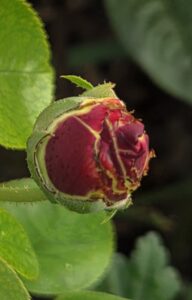
This week, after heat and drought, the Peace Rose in my garden bloomed. It was a visual symbol of hope for a better world that I needed to witness this week. With healthy foliage, it did not bloom in May or June. I worried it would succumb to the extreme weather experienced in early summer. I noticed buds setting in early August. An old saying assures us that a pot never boils over if you watch it. This rings true when waiting for a flower to bloom. In a week heavy with concern for this country, my Peace rose made its presence known.
I knew then why the Negro Garden Clubs chose this as their logo at such a challenging time in history. Peace, positivity, and hope are the gifts from my garden this week. I am honored to know that peace happens with persistence, resistance, and a bit of hope.
Call to Action
If you know of an African American Garden Club, or have a relative who was a member of a Negro Garden Club, let’s connect before the stories and documentation are lost. Sharing this story is important as we rebuild and beautify our communities.
What plants are in your garden that represent something meaningful in your life? Do you know the plant’s history?
Sitting here debating whether to cut this first bloom or enjoy its presence in this moment…


Hot…Not Bothered in the Garden

Hot and not bothered should be our call to action, as we face a few days of weather extremes. It is June with July peaking through the window. The temperatures slated for this week is what we have come to expect in August. Did I mention it is still June?
Nevertheless, there is little we can do today about the heat wave coming our way. Do not sweat, there are a few things we can do to help our gardens survive as our climate evolves. Let’s chat about best hot weather garden practices first.
- Cover the soil. Use some type of mulch. At this point use leaves collected from last fall, grass clippings, compost, or mulch. Be careful to not pile any of these against the stems or trunks of plant material. The goal is to keep the soil a tad cooler than the above ground temperatures. This is also a good way to suppress weed seeds that might need a place to land.
- Water. The preferred time to water is very early in the morning, preferably before 8:00 am, or after rush hour in the evening. Watering when the air is cool is not just good for the plants, but the gardener as well. Watering at the base is advised. This will minimize unwanted diseases such as mildew on the foliage, or bacterial rot. Water deeply twice a week. This will encourage the roots to grow deeper into the soil where it is cooler.
- Do Not Fertilize. The last thing you want to do is encourage growth when it is extremely hot. If planting annuals, imagine they are running a race. Fertilizing in extreme heat pushes the plant into a state of extreme stress. Fertilizing can promote so much growth, the plant becomes stressed. If humans cannot handle stress, imagine a plant encouraged to perform in extreme heat.
- Prune later. As we know, pruning encourages growth. When it is hot outside, many plants want to simply be beautiful. Pruning in the fall when it is cooler will provide a better opportunity for growth.
- Protect your pots. Many plants cannot take extreme heat – labels are not always perfect. For example, I have found potted Geraniums have bigger, abundant blooms and healthier foliage when I provide a little buffer from the sun. It is your garden. Feel comfortable moving your pots to a shady spot until the hot weather calms down. Use shade cloth if the pot is too big to move. It is only temporary. (we hope)
Now that we have a plan of action, did you choose the right plants? Warm season gardening should rebrand. Hot season gardening is a more appropriate name. Summer used to be considered hot if a 90 degree day dared to show up. Over the past few years, 100 degree days are part of the seasonal norm. After pouring over catalogs all winter, that cute little annual is no longer holding u p to the heat. What does the gardener do? Try something new of course.
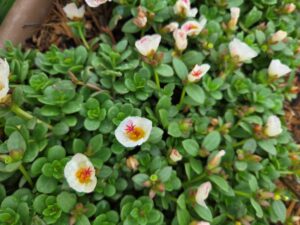
I have a renewed affection for portulaca and purslane. These garden friends know how to show up and bloom, despite the heat. They are annuals, always pot ready, however great as an underplanting in full sun with optimal drainage. Low maintenance no matter where it is planted. Adding purslane to my salad is also quite the treat. I grew up planting portulaca with my Mom in our summer garden. A pot along the edge of my walkway reminds me of that shared experience.
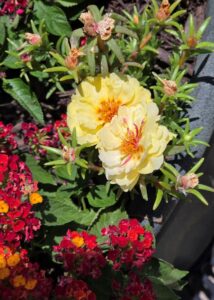
A few annual plants to consider are Lantana, zinnias, marigolds, cosmos, and globe amaranth to name a few. Check your zone and seed packet days to harvest. You might be able to seed a late blooming cutting garden.

If you love perennials try Delosperma, Yarrow, Echinacea, Linum lewisii, and Perovska. Each of these plants are sure to stand up to hot temperatures as well as less than perfect conditions. I planted Linum lewisii at the curb to grow as the bulb foliage yellows. It is truly neglected. The trashcans have fallen on them, the salted snow piled onto them from the street, yet they thrive.
As the temperatures rise, remember it is only almost July. August will come, it will be hotter, and we can sail into September. That will be a perfect time to remember how we handled a successful summer garden, while avoiding being hot and bothered.
I think I’ll use some lemon balm and lemon basil for a glass of iced tea tonight. Are you growing herbs from your garden for iced tea? I heard they like it hot.


Maryland Inspires and Excites Gardeners and Their Gardens

Maryland is the Preakness State. Adored by horse and hat lover’s alike. For the gardener, the Maryland House & Garden Pilgrimage is definitely what the gardener in the know looks forward to. It is the perfect way to see gardens in neighboring counties which are often not open to the public. From historic homes, sprawling estates, to those gorgeous local gardens, generous Marylanders welcome ticketed guests. A wonderful way to view gardens from a different perspective.

I recently attended the Maryland House and Garden Pilgrimage in Talbot County. It was the perfect day to enjoy the serene landscapes as I traveled from garden to garden. It was quite a relaxing drive. Gracious homeowners and guests along the way, were happy to pause and have a conversation.
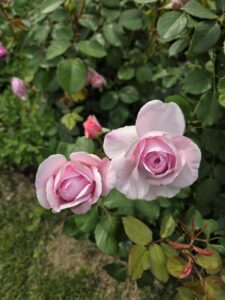
There were roses in abundance, peonies in bloom, and other assorted perennials. Many perennials were chomping at the bit to show off their beauty. Ooo’s and aah’s filled the air as the guests moved throughout the properties. I followed one path which had the perfect place to take a seat. I paused to notice different views in each direction. There was even a place right at the water’s edge. I imagined lingering at the end of a day filled with gardening, to enjoy good conversations, all while watching the sun become a distant memory. The views were absolutely phenomenal. I noticed a pet cemetery strategically placed to remember the fur babies who kept the homeowners company over the years. It was the perfect spot for a final resting place right next to a living shoreline.
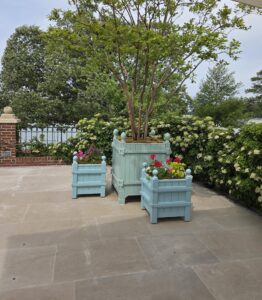
Pops of color excite and inspire all who visited to try something new. The ooh’s and aah’s shared a sense of approval as well as a desire to see what more this landscape had to share. Along the way, visitors had the opportunity to soak up more inspiration from the walled garden filled with bodacious blooms to the serenity of the woodland nooks.
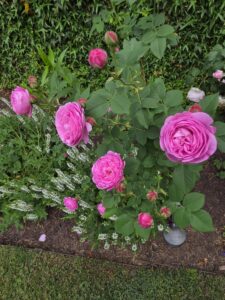
Once at the house, the invitation to take a seat and enjoy a cup of lemonade was truly an unexpected gift to those who visited this garden. This was just one of the gardens I visited on a perfect day of garden tourism in Maryland.
Most gardens do not allow photographs, as these are private homes. Having a good memory or taking notes in the tour book is a good idea. Taking notes of container plant combinations or named roses, reminds the the gardener later on. There was a vignette in a beautiful pot that touched my heart so, I took notes. On the way home, I headed to the closest garden center in an attempt to capture the memory.
On that beautiful Maryland day, I saw a historical Orangery, had ice cream in St. Michel’s, and met other Marylanders from Alleghany County. There might still be tickets available for purchase. The Maryland House and Garden Pilgrimage will feature Kensington this weekend on Sunday, June 7th. The final tour for this year will be in Frederick County on Saturday, June 13th.

I wonder if they will have ice cream for dinner? The Maryland House and Garden Pilgrimage is a great way to see how others garden. It is also a great way to find out more in the familiar places close to home.

Need more information, visit https://www.mhgpo.org/2026-tours/
Teri, Cottage in the Court
(Photos are my own and no AI was used for this posting.)

First Day, First Snow, and Time to Sow

Happy New Year. I awakened early on this first day of 2026 to witness the first snowfall. My imagination allowed me to assume it would be plentiful after driving on heavily treated roads the past two days.
We bundled up, cracked open the door, and witnessed golden Amsonia branches glistening with shimmering flakes of snow. Powdered snow dusted the pansies and the leaf blanket that covered them.
Arms locked together, we walked on the first day, looking up in hopes a snowflake would gently rest on our faces. Our cheeks facing the heavens were greeted with gentle snowflakes. Each one instantly melted upon contact. This was an innocent moment, frozen in time.
Precious sniffed here and there, for once, slowly strolling as if appreciating the silent start to this day. Walking at daybreak encourages me to fall in love with my sleepy urban community. The unique tree canopies carry stories of the past. Each homeowner creates a garden or strives toward having the perfect lawn. Every yard writes a new chapter in this neighborhood story.

Upon our return home, I notice bulb tips emerging from the earth in my garden. I realize it’s time to select and sow seeds for the next season, not just in my garden, but also in my life. What seeds will I sow? Only seeds of positivity, perennial seeds preferably, or biennial seeds. Sowing seeds reminds me to avoid any distractions or things that might discourage me from sowing seeds of joy for the next season. Sown correctly, the next season’s blooms will remind me to hang in there, witnessing all things beautiful!
What was your impression of the first day of 2026? Did you have snow? Did you rest and reflect? I hope you made time for a memory and a plan for sowing seeds of joy.
I love the times of rest, reflection, and preparation that occur on the first day of each year.
Teri, Cottage in the Court